
Updated: October 27, 2026
A church wedding is a different kind of shoot
Many Miami couples still marry in a parish church, from small neighborhood churches in Little Havana and Hialeah to the larger churches in Coral Gables and on Miami Beach. For a videographer, a Catholic wedding Mass is nothing like a ceremony at a hotel or on the sand. It runs longer, it follows a set order, and it happens in a sacred space with its own rules. The priest or deacon, and often a parish wedding coordinator, decides where cameras can go and what they can do. A good wedding film respects that and still captures everything the couple will want to see again.
This guide explains what to expect when you book Catholic wedding videography in Miami: the questions to ask your parish, the usual restrictions, where the camera team typically stands, how sound is handled, and which parts of the Mass end up in the final film.
Start with the parish, not the videographer
Every parish sets its own policy, and two churches a mile apart can have completely different rules. Before you sign with any wedding videographer, ask the parish office or the wedding coordinator for their photography and video guidelines in writing. Most parishes have a one-page sheet. If yours does not, these are the questions to ask:
- Can the video team move during the Mass, or must they stay in fixed positions once it begins?
- Is the sanctuary, the area around the altar, off limits?
- Is any lighting allowed beyond the church's own lights? (Flash and video lights are often prohibited.)
- Can a microphone be placed on the groom, the priest or the ambo where the readings are proclaimed?
- Can the videographer connect to the church sound system?
- Are there parts of the Mass, such as the consecration, during which no movement or filming is allowed?
- Must the video team attend the rehearsal or meet the coordinator beforehand?
Send that sheet to your videographer as soon as you book. An experienced crew will plan their camera positions and audio around it rather than finding out at the church door.
Where the camera team usually stands
Exact positions depend on the building and the parish rules, but most Catholic weddings in Miami end up with a similar setup for a two-person crew.
The main camera at the back or in the center aisle
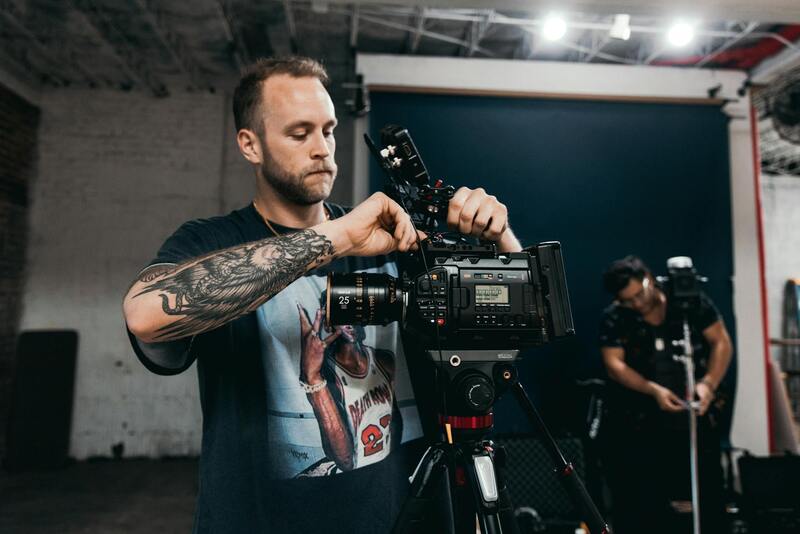
A camera on a tripod at the back of the center aisle, or in the choir loft if the parish allows it, covers the processional, the full altar and the recessional. With a long lens, it gets tight shots of the couple during the vows without anyone moving. This camera often runs for the entire Mass as a safety angle.
A side angle facing the couple
Because the couple faces the altar, the back camera sees mostly their backs. A second camera at the side, along a side aisle or near a pillar outside the sanctuary, catches their faces during the vows, the exchange of rings and the moment they turn to the congregation. Where a second position is not allowed, the videographer may shoot from the first pew area on the side, staying low and still.
Movement windows
Some parishes let the crew reposition during the homily or during music, but not during prayers. Others allow no movement at all once the processional ends. A second shooter is especially useful in a church, because two fixed cameras do the job that one roaming camera would do at a beach ceremony.
Sound in a stone and tile church
Church acoustics are beautiful for a choir and hard for vows. Hard surfaces bounce sound, and a priest's voice through the house speakers can echo for a full second. The best results come from close microphones:
- A small wireless lavalier or a pocket recorder on the groom picks up both partners' vows clearly.
- A second recorder on or near the ambo captures the readings, which family members often read and want to keep.
- A feed from the church soundboard, if the parish permits it, gives a clean copy of the priest and the cantor.
- An ambient microphone near the choir or organ records the music for the edit.
Ask before anything is placed on the priest. Some are happy to wear a lavalier and some prefer not to. We go deeper on microphones and echo in our article on recording the vows at a Miami wedding.
The moments of the Mass worth filming well
A full nuptial Mass runs about an hour, and a wedding ceremony without Mass about 30 to 40 minutes. Not everything belongs in a highlight film, but couples usually want these parts covered from more than one angle:
| Moment | Why it matters on film |
|---|---|
| Processional and the handoff at the altar | Usually the most emotional minute for both families |
| Readings | Often read by grandparents, godparents or siblings |
| Exchange of consent and vows | The heart of the ceremony, needs clean audio and faces |
| Blessing and exchange of rings | Close detail shots of hands and rings |
| Arras and lazo, if included | Hispanic traditions many Miami families keep: the thirteen coins and the cord or rosary placed over the couple |
| Offering of flowers to Mary | A quiet, personal moment that is easy to miss without a side angle |
| Presentation and recessional | Joy, applause and the first walk as a married couple |
The consecration and Communion are usually filmed only from a fixed, distant position, if at all, and many couples choose to leave them out of the highlight film and keep them in the full ceremony edit.
Light, time of day and the church schedule
Churches are darker than they look to the eye. Modern cameras handle low light well, but stained glass, mixed bulbs and a bright doorway behind the bride still make exposure tricky. Midday and early afternoon ceremonies get more natural light through the windows. Saturday wedding slots at popular Miami parishes are also tightly scheduled, sometimes with a confession time or a Vigil Mass right after, so there may be very little time for portraits inside afterwards. Plan the family photos and any video portraits for the church steps or the reception venue, and build the transfer into your wedding day timeline.
Practical tips for couples
- Introduce your videographer to the priest or coordinator at the rehearsal. A five-minute conversation prevents surprises on the day.
- Ask whether the parish requires vendors to sign its policy sheet or provide insurance.
- Tell the videographer about any family tradition, such as a blessing from parents before the processional, so it is not missed.
- If the ceremony is bilingual, let the team know who reads in which language so subtitles can be added later.
- Keep the full ceremony edit. Years later, many couples watch it more often than the highlight film.
Catholic wedding videography with Miami Event Videography
Our team has filmed weddings in parish churches across Miami-Dade and Broward, in English, Spanish and bilingual ceremonies. We ask for the parish guidelines as soon as you book, attend the rehearsal when the church allows it, and use quiet, fixed camera positions and discreet audio so the Mass is never disturbed. You receive a highlight film plus a full-length ceremony edit with every reading, the vows and the music intact.
If you are planning a church wedding, send us the parish name and your date. We will tell you honestly what coverage that church allows and how we would plan it. You can also read more about our team or browse other wedding planning guides on our blog.