
Updated: October 27, 2026
Livestreaming a Miami wedding or quinceañera for family abroad: setup, venue internet, privacy and the recording that remains
Miami families are spread across the Americas and beyond. A grandmother in Bogotá, a brother posted overseas, cousins in Port-au-Prince or Caracas who could not get a visa in time: for many couples and quinceañeras, a livestream is the only way the whole family sees the ceremony. It became normal in 2020 and it stayed, because the need was always there. But a livestream done as an afterthought is a phone on a tripod that drops out during the vows, and a livestream done well is a small broadcast. This guide explains what a professional stream of a private celebration in Miami involves: the cameras and audio, the internet connection at venues that were not built for it, the platforms and who can watch, the privacy questions, and how the stream and the wedding film work together rather than against each other.
What the family abroad actually needs
Not a cinematic production. They need to see the faces clearly, hear the words clearly, and have the stream start and stay up. A single well-placed camera with good audio and a reliable connection is worth more than three cameras and a switcher on a link that fails. The priorities in order: audio, connection, framing, then everything else. The audio problem is the same one the film crew solves, and the ceremony sound setup described in our note on filming speeches and toasts feeds the stream as well as the recording.
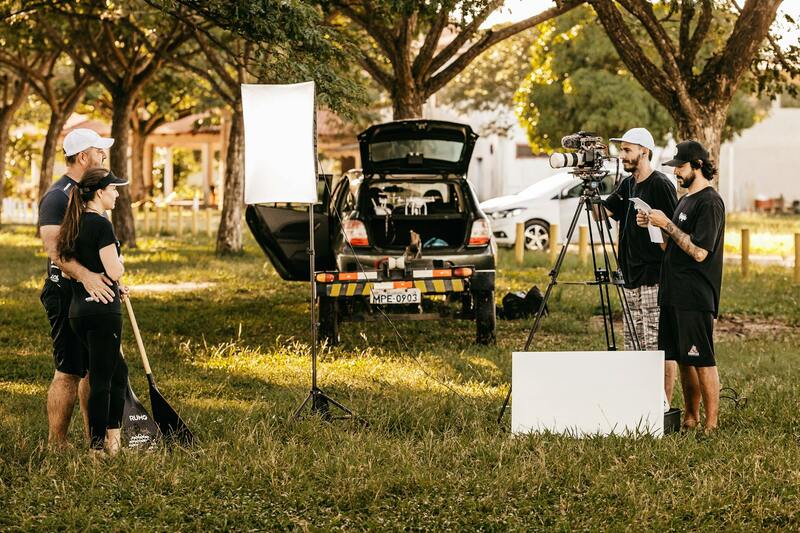
The setup
| Element | Basic | Full |
|---|---|---|
| Cameras | One fixed camera at the back on a wide-to-medium frame | Two or three cameras (wide, close on the couple, close on the officiant or the aisle) into a small switcher |
| Audio | Feed from the officiant's wireless mic or the venue PA into the encoder | Mix of the lavalier feeds and the PA, with the film crew's audio shared |
| Encoder | Camera or phone app streaming directly | Hardware encoder with bonded connections and a recording of the program |
| Connection | Venue wifi or a single phone hotspot | Bonded cellular (multiple carriers) plus venue ethernet where available, tested on the scout |
| Platform | Private YouTube link, Zoom, Facebook | Password-protected event page with a player, chat off, replay for a set period |
| Operator | A friend or a planner's assistant | A dedicated stream operator, separate from the film crew |
The full setup is what a family with a hundred remote viewers and a grandmother who cannot troubleshoot needs. The basic setup is fine for a small elopement with a few people watching who will forgive a glitch.
The internet problem at Miami venues
Beaches, gardens, historic estates, boats and hotel ballrooms deep inside a building: the places people marry in Miami are frequently the places with the worst connectivity. A stream needs a steady upload of a few megabits per second for the whole ceremony, and venue wifi shared with two hundred guests' phones will not provide it. What a professional stream operator does:
- Tests the connection on the scout at the same spot and, ideally, at the same time of day, on the carriers they will use.
- Brings a bonded cellular unit that combines several carriers' signals, so that one weak network does not end the stream.
- Asks the venue for a wired ethernet port near the ceremony space; hotels often have one for AV, and it is the most reliable option when it exists.
- Streams at a bitrate the connection can sustain, not at the highest the camera can produce; a stable 720p is better than a stuttering 4K.
- Records the program locally regardless, so a dropout in the stream does not mean the moment is lost for the replay.
Boats and beaches at the edge of the coverage area are the hard cases; a ceremony on the water may need a satellite unit or a decision to record and post a replay quickly rather than stream live. Say where the ceremony is when you book the stream, and the operator will tell you what is possible.
Privacy and who gets the link
A wedding is private, and a stream turns it into something that can be shared, screen-recorded and reposted. Sensible defaults: a private, unlisted or password-protected link sent to a family list, not posted publicly; chat and comments off or moderated by a family member; a replay available for a fixed period (a week or two) and then removed; no stream of the reception dance floor unless the couple specifically wants it. For quinceañeras and events with many children present, be more careful still, and tell guests on the invitation that the ceremony will be streamed to family so nobody is surprised to be on camera. Officiants and houses of worship sometimes have their own rules about streaming; ask when you ask about filming.
The stream and the film
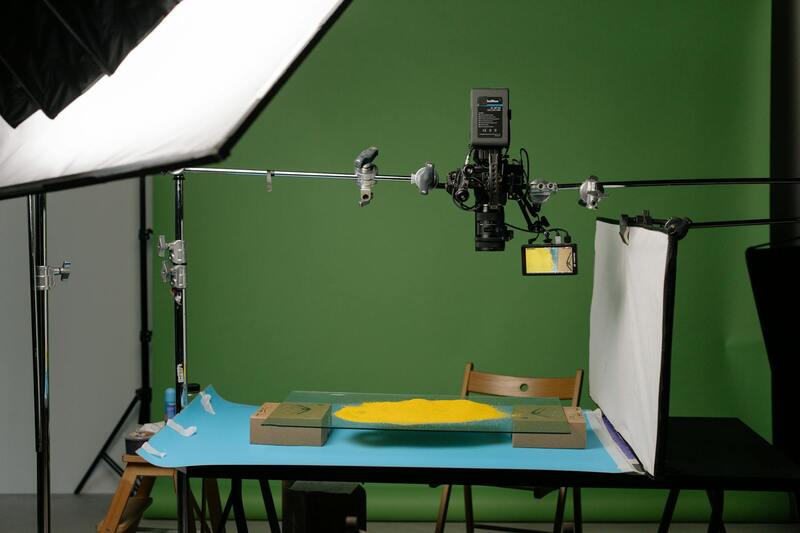
The stream and the wedding film are different products with different jobs, and the best result comes when the same team does both, or when the two teams coordinate. Shared audio is the obvious gain; a single agreed position for the stream camera keeps it out of the film's shots; the stream operator's program recording is a useful extra angle in the edit; and the film crew's cameras can feed the switcher when the operator is part of the same team. The one thing to avoid is a stream camera on a tripod in the aisle that the film crew has to work around. The planner's role in fitting all of this into the day is described in our note on working with your wedding planner and vendors.
After the day, the family abroad also wants the film. The highlight or documentary edit, described in our guide to highlight film versus full documentary edit, is delivered as a link they can watch and download, which is where the stream's replay window ends and the permanent record begins.
Bilingual streams and the family in two languages
For a Miami family the audience abroad is often Spanish-, Portuguese- or Creole-speaking while the ceremony is in English, or the reverse. A stream cannot subtitle live, but the couple can: a short welcome card at the start in both languages, a printed order of service emailed to the remote guests in advance, and an officiant who repeats the key lines in both languages when that is the plan for the room anyway. The recording that follows can be captioned in the edit.
Streaming with our team
We stream weddings, quinceañeras and family celebrations across Miami as part of our video coverage, with a dedicated operator, one to three cameras into a switcher, shared ceremony audio from our lavalier and PA feeds, bonded cellular with venue ethernet where it exists, a bitrate set for the connection we tested on the scout, a local recording of the program, and a private password-protected page for the family with a replay window you choose. We coordinate camera positions with our own film crew so nothing sits in the aisle, and we tell you before the day whether a beach or a boat can be streamed live or should be a fast replay. If part of your family cannot travel, tell us when you enquire through the contact page; the way we cover the whole day is on the about page.