
Updated: October 27, 2026
Speeches are the part that people rewatch, and often the part that is most frequently ruined.
Ask couples a year after their wedding which section of the film they revisit. It's rarely the drone shot of the coastline. Instead, it's the father who couldn't finish his sentence, the best friend whose joke landed, and the grandmother who spoke for ninety seconds and said everything.
Speeches are the most challenging part of the day to capture well, as they occur under the worst conditions of the entire event: a noisy room, poor lighting, a moving microphone, and a speaker who cannot be asked to repeat their speech. This guide covers how to plan for speeches, what typically goes wrong at Miami receptions, and what a couple can do in advance to safeguard the moment.
Why receptions are difficult
Everything that makes a reception enjoyable also makes it challenging to film.
- Noise. Conversation, cutlery, service staff, air conditioning and often music running under the speeches.
- Light. Reception lighting is dim and warm by design, and it is often coloured, which is flattering to the room and difficult for cameras.
- Movement. The speaker may not stand where expected, may turn away to address someone at a table, or may walk while talking.
- Microphone handling. A handheld microphone held at chest height, passed between speakers, or forgotten entirely by someone who thinks they can project.
- Unpredictable timing. Speeches routinely start late, run long, and someone unscheduled decides to say a few words.
- Guests in the way. People stand up to watch, and they stand in front of the camera.
Outdoors in Miami, add wind to the microphones and fast-changing light as the sun sets. A poolside or terrace reception is beautiful, but it presents a more challenging audio environment than an interior ballroom.
Audio is the whole job
A speech with excellent picture quality but poor sound is unusable. Conversely, a speech with plain picture quality but clean sound is treasured. Given a choice, prioritize protecting the audio.
The reliable approach involves using multiple independent sources.
- A feed from the venue's system, where there is one. Usually the cleanest source when the microphone is used properly.
- A small recorder near the speaking position, independent of the venue's equipment.
- A lavalier on the person speaking, practical for scheduled speakers, less so for spontaneous ones.
- Camera and room microphones for ambience, reactions and as a last resort.
The venue feed is worth taking and never worth relying on alone, because it depends on someone else's settings and a muted channel produces silence with no warning. The same principle applies across event work, as covered in the article on working with your planner and vendors.
The microphone habit that solves half the problem
Most speech audio issues arise from holding the microphone too low. A handheld microphone should be held at chin height, close to the mouth. If the microphone is held at chest level, it will pick up more room noise than the speaker's voice.
Whoever hands the microphone over should demonstrate, in one sentence, where to hold it. A ten-second demonstration by a planner or MC enhances the audio quality for every subsequent speech, making it the single most effective intervention available.
Camera positions and coverage
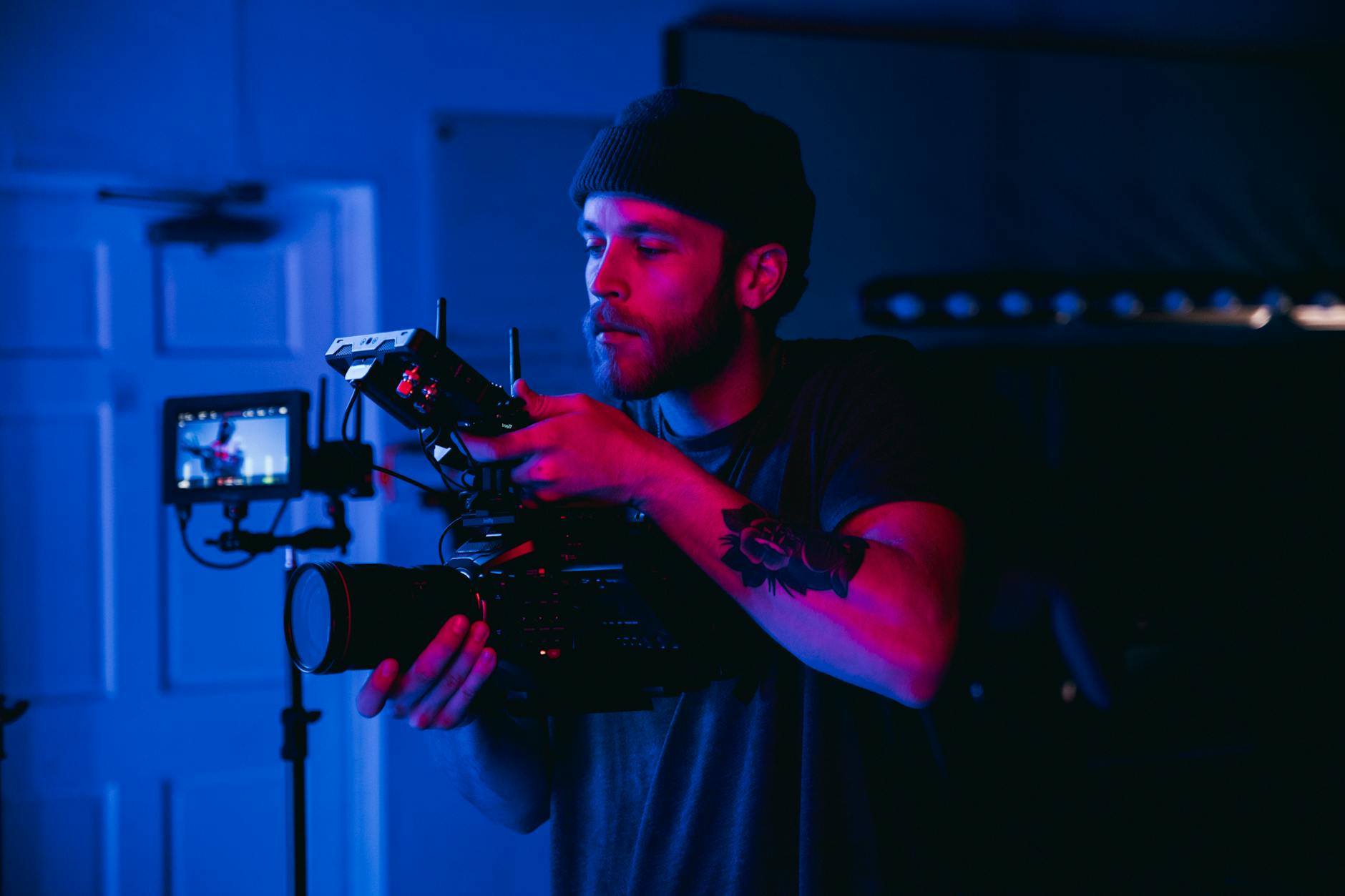
Two cameras are the practical minimum for speeches: one focused on the speaker, and the other capturing the audience's reactions. These reactions transform a mere recording into a compelling film. A joke becomes funnier when you see the room laughing, and a tender moment feels more deep when you see the couple's faces lighting up with emotion.
Where to place them:
- The speaker's camera should be positioned close enough for a tight shot, without any guests walking through the frame.
- The reaction camera is positioned on the couple because their response is the emotional center.
- Both agreed with the planner in advance to ensure that their positions do not block service routes or sightlines.
- If the room is genuinely too dark, lighting should be added. The lighting should be kept low and warm instead of flat and bright.
Judgment matters when it comes to lighting. Adding a hard light to a candlelit reception can protect the footage while also altering the atmosphere for the guests. Placing a small amount of soft light near the speaking position, before guests are seated, often strikes the right balance.
What the couple can do in advance
Several of these cost nothing but make a significant difference.
- Fix a speaking position and tell the speakers where it is, rather than letting them speak from wherever they are sitting.
- Share the speech order with the video team, including anyone likely to add themselves.
- Ask speakers to keep it to a few minutes, which improves the speeches as much as the filming.
- Have the MC ask guests to stay seated during speeches, which solves the blocked-camera problem.
- Turn background music off, not down. Music under a speech cannot be removed later and it competes with every word.
- Schedule speeches before the room gets loud, typically between courses rather than late in the evening.
The importance of the music volume cannot be overstated when dealing with the venue or the band. Even at a reduced volume, the sound can still bleed into every microphone. Once this happens, the unwanted noise will be permanently embedded in the recording.
If someone cannot attend
A relative who cannot travel can record a message in advance. This message can be played at the reception or included in the film. This often comes up with families spread across countries, a situation common in Miami. To ensure the recording fits well with the rest of the material, it is advisable to request the recording well in advance. The recording should be filmed in a quiet room in landscape format.
How we cover speeches
We record every speech through at least two independent audio paths. We also use the venue feed but do not depend on it. Throughout the event, someone monitors the audio on headphones.
We request the speech order in advance and maintain communication with the Master of Ceremonies. This matters because the most frequent reason for missing a moment is a schedule change that wasn't properly communicated.
Tell us your reception timeline and venue and we will plan the coverage around the moments that matter to you. More on celebration filming in the videography blog, related material on celebration of life videography, or get in touch through the contact page.
The short version
Speeches are the most rewatched parts of the film and are the hardest to capture. Therefore, prioritize protecting the audio: use multiple independent recordings, monitor through headphones, and avoid relying solely on the venue's feed.
Ask whoever passes the microphone to demonstrate to the first speaker how to hold it. This simple act will improve every speech that follows.