
Updated: October 27, 2026
A gathering that only happens once
Most events on this site are planned months in advance. In contrast, a celebration of life is often organized within days by people who are exhausted and grieving. This event brings together a group of people who may never all be in the same room again.
Families are increasingly requesting that these events be filmed. Sometimes, this is because relatives are unable to travel and attend in person. Other times, it is because the stories told on that day might be the last chance for anyone to recount them. Finally, sometimes it is simply because no one present will remember the event clearly, and grief can sometimes cloud one's memory.
It is a genuine service that requires a different approach from all our other activities. Here's how it operates, along with key considerations before making a decision.
Why families ask
The reasons are often practical rather than sentimental, which surprises people.
- A family abroad is unable to arrange travel within the available time. This situation is more common than unusual in Miami.
- Relatives who are too unwell or too elderly to attend.
- Children who are currently too young but will want this later.
- Eulogies that contain unique family histories, details that exist nowhere else.
- The simple fact is that the immediate family will remember almost none of the day.
That last point is worth considering seriously. People who are close to someone who has passed away often go through the motions without truly being present. Months later, they may want to know what was said during the loss, but there may be no record available.
The eulogy point matters too. Someone stands up and tells a story about a grandmother's arrival in this country in 1968, and that story has never been written down. When the person telling it is gone, so is the story. A recording of that afternoon is the only place it survives.
Filming it means being nearly invisible
The approach is the opposite of every other event. There is no direction, no repositioning of anyone, and no requests for a moment of silence. You simply take what happens from wherever you can be without being noticed.
In practice that means:
- Sometimes one person, occasionally two, but never a crew.
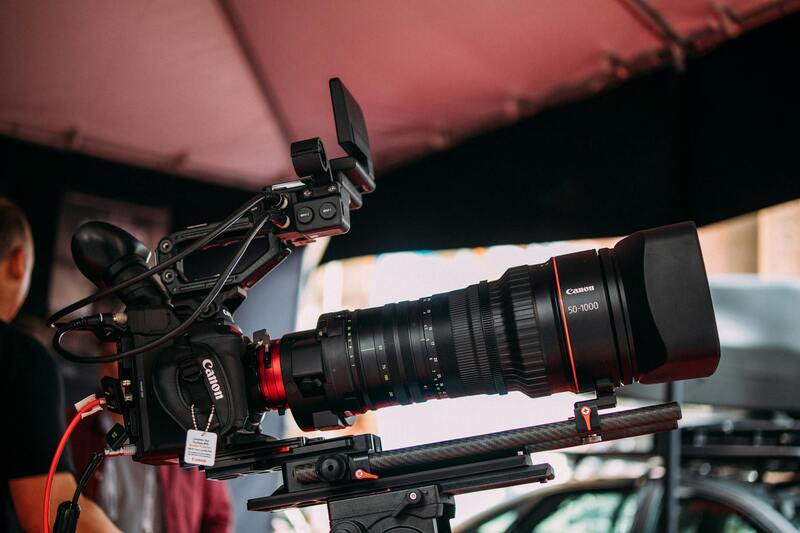
- Long lenses should be used from a distance at the back, rather than from close angles.
- Available light only. No additional lighting is ever used.
- Locked-off cameras were used where possible to ensure that no one is watching an operator move.
- Wearing dark clothing, arriving early, and staying still.
- At no point is anyone approached for anything.
The audio is more critical than the visuals in this context, making it the aspect worth investing in. What people primarily seek afterwards is what was said. Placing a discreet recorder near the lectern, or utilizing a feed if the venue has a system, ensures that eulogies are captured accurately. Additionally, positioning a camera at the back with its own microphone can provide a comprehensive view of the room.
Consent, quietly handled
The family should decide on one point of contact, rather than having four people handle inquiries. Someone grieving should not be tasked with answering questions from a videographer. This arrangement should be settled in advance, so that nothing needs to be discussed at the venue.
Mourners have not given their consent for anything. This is not a situation where you would seek signatures from people. Practically speaking, the film is intended for the family, not for public distribution, and it should remain that way. Any individual who does not wish to be filmed should be allowed to express this desire to the family contact, and this request should be honored without further discussion.
Nothing from a service like this should appear on a portfolio, social account, or website. This point should not need to be emphasized, but it is.
What the venue and the officiant allow
Houses of worship have rules about filming, and services for the deceased are often the strictest. Some places do not permit any filming inside. Others allow filming from a single fixed point. Some permit the recording of eulogies but not the liturgy.
Ask early and accept the answer without negotiating. This is not a venue restriction to work around; it is a religious observance, and the family's relationship with that community outlasts your video. Our note on filming religious ceremonies with respect covers the broader ground.
| Setting | Usually | Ask about |
|---|---|---|
| House of worship | Restricted, sometimes fully | Position, which parts, officiant's view |
| Funeral home chapel | Generally permitted | Audio feed from their system |
| Graveside | Handle with great care | Whether at all, and from what distance |
| Reception or gathering | Usually fine | Whether the family wants it |
The graveside ceremony deserves its own consideration. Many families record the service but often stop there. The burial is the most private moment of the day, and the honest recommendation is often to put the camera away.
What to do with the footage
Here is a piece of advice that goes against conventional practices: do not rush the editing process, and consider postponing the edit altogether.
In the first weeks after a death, a family is not in a position to make decisions about a film. To ensure the recording exists and is safe, we will deliver the full, unedited recording. We will clearly state that the recording will be kept safe. When the family is ready to have a shorter version, it can be made then.
Frequently, that call comes a year later, sometimes at an anniversary, and sometimes not at all. Both scenarios are acceptable. The true value lies in the existence of the recording, not in delivering a product on a specific schedule. Encouraging a grieving family to approve an edit is the wrong approach at the wrong time.
When a shorter piece is eventually needed, it is usually straightforward: the eulogies, mostly intact. This is not a montage, nor a music-driven highlight reel. The urge to apply the tools of a wedding film here should be resisted, because the material stands on its own without additional embellishment.
Whether to do it at all
It is worth saying plainly: not every family should film a memorial, and there is no one correct answer.
Some people find it intrusive, and that instinct should be respected rather than persuaded against. If the family is divided, that division is more important than the footage. Nobody has ever regretted not filming a funeral as much as they would regret a service that felt observed rather than shared.
If there is any doubt, a middle path is available: record the audio of the eulogies only. This approach captures what almost everyone actually wants afterward, is completely unobtrusive, and involves no camera in the room at all.
Call us and we will make it simple
If your family is considering this option, a single phone call is all that's needed. We'll ask a few questions, provide an honest assessment of whether we believe it's worth pursuing, and handle all the arrangements ourselves, including the venue and the funeral director. This ensures that no one in your family has to deal with these details.
We arrive early and stay at the back, ensuring you won't notice us. You receive the recording, and there is no deadline for deciding what happens next. If, after speaking with us, you decide against it, that is a completely reasonable outcome, and we will acknowledge it as such.
You can see how we approach sensitive work on our about page, and our note on family reunion video covers the related case of preserving a gathering. Reach us through the contact page, and one of us will call you back rather than sending a quote.