
Updated: October 27, 2026
The dances are the center of the quinceanera film
Ask any family in Miami what they want most from their quinceanera video and the answer is almost always the dances. Months of rehearsals, a choreographer, a court of damas and chambelanes, a dress change and a surprise dance that the guests have not seen yet. The waltz and the surprise dance last perhaps ten minutes in total, and they are the reason many families hire a videographer in the first place.
This guide is about filming those moments well. It covers how the vals and the surprise dance are usually structured, why the videographer should see a rehearsal, where cameras go in a ballroom, how lighting and the DJ affect the result, and what the family should ask for in the final edit. It applies whether the party is in a Hialeah banquet hall, a Coral Gables hotel or a private venue in Kendall.
How the dances are usually structured
Every family and choreographer does it differently, but most Miami quinceaneras follow a version of this order:
- The grand entrance. The quinceanera arrives, often on a staircase or through a decorated arch, sometimes after the court enters in pairs.
- The vals. The waltz, danced first with the father or another important man in her life, then with the court. In Cuban tradition this can be a large formal piece with many couples, sometimes called the cuadro.
- The father-daughter moment. A slower dance or a short exchange, and in some families the changing of the shoes from flats to heels.
- Family dances. Grandfathers, uncles, godparents and brothers taking a turn.
- The surprise dance. After a dress change or a quick costume swap, the quinceanera and her court perform a high-energy routine with modern music, often reggaeton, pop and Latin dance mixes.
The order and length vary, which is exactly why the videographer needs the choreographer's plan in advance. Our broader guide to quinceanera videography in Miami covers the rest of the day, from getting ready to the mass and the toast.
Why the videographer should see a rehearsal
A choreographed group dance moves in formations. Couples cross, form lines and circles, and the quinceanera often ends up in the middle. If the camera operator does not know where she will be at the key moment, the best shot of the night can end up blocked by a chambelan's back.
We ask families for one of two things before the party:
- A visit to a rehearsal, usually the last full run-through a week or two before the date. This lets us note formations, lifts, the big finish and where the dance faces.
- Or a phone video of a rehearsal from the front, plus the final music files. Even a shaky clip is enough to plan the camera positions.
We also ask the choreographer which side of the room the dance is designed to face. Most routines are staged toward the head table or the main guest section, and the main camera needs to be there.
Camera positions in a ballroom
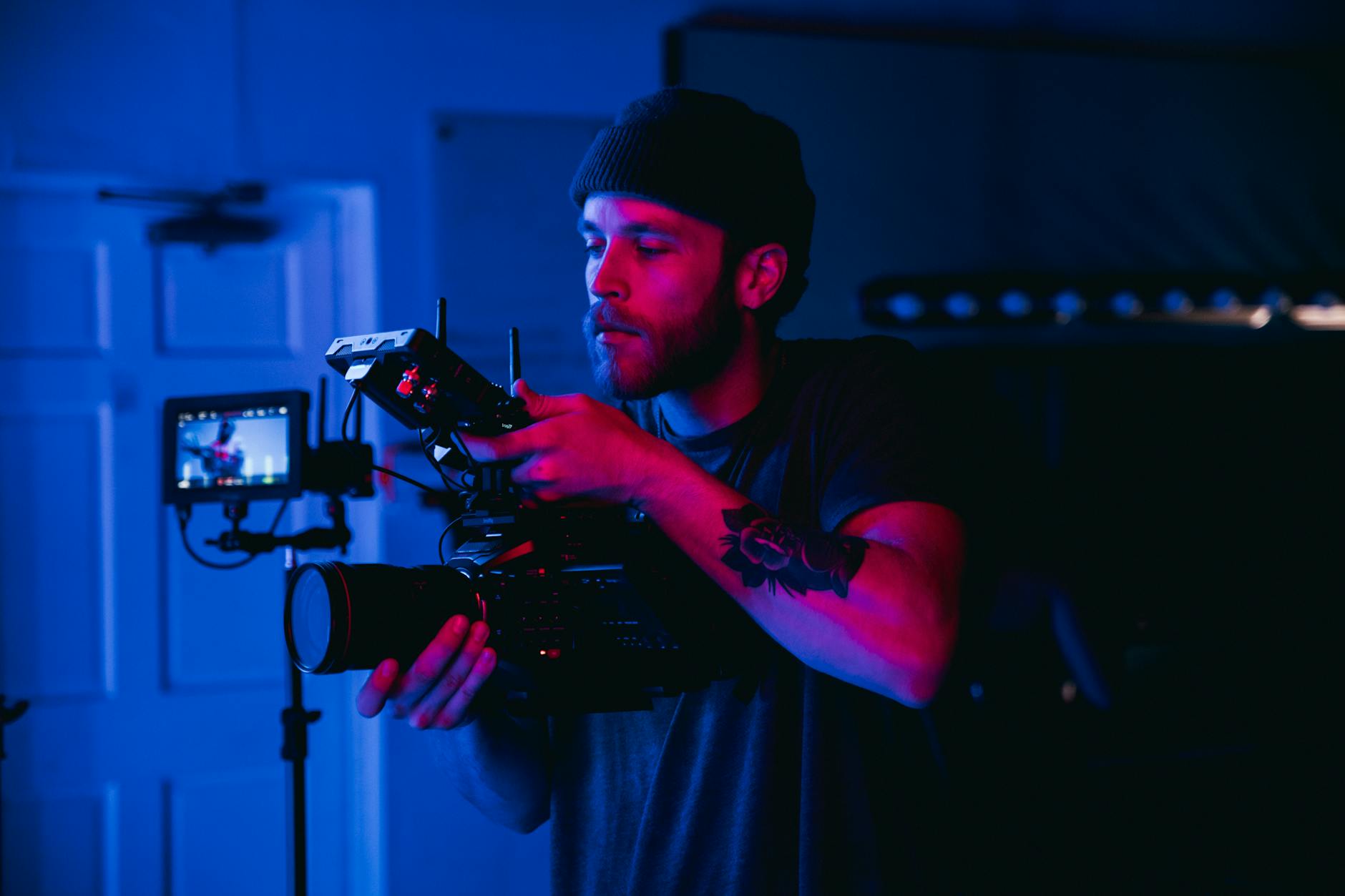
| Position | Purpose | Notes |
|---|---|---|
| Main camera, front center | Full formations from the side the choreography faces | Raised slightly on a platform or stand to see over the first row of guests |
| Second operator, moving | Close shots of the quinceanera, her father, reactions | Stays at the edge of the floor and never crosses the dancers' path |
| High or wide angle | Patterns in the vals, the full court at once | A balcony or high stand if the venue allows it |
| Static reaction camera | Grandparents, mother, head table | Often the shot families watch most in the final film |
For a large court or a big venue, two operators is the minimum we recommend for the dances. A single camera can either follow the quinceanera or show the formation, but not both. The case for a second operator is laid out in our article on second shooter coverage, and the same logic applies here.
Light, haze and the DJ
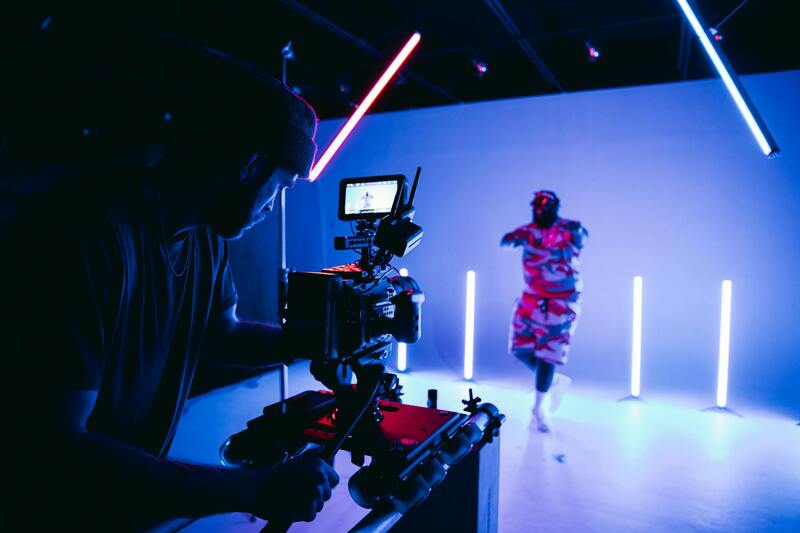
Quinceanera venues love effects: moving lights, uplighting in party colors, cold sparks and low fog for the first dance. They look spectacular in the room and they can be hard on camera.
- Fog machines. Low fog around the dancers' feet looks great on video. Heavy haze across the room washes out faces. Ask the DJ or lighting company to keep it low during the vals.
- Color washes. Deep purple or red light on a white or pastel dress turns it a different color on screen. We ask for a warmer, softer white on the dance floor during the waltz, and the party colors can return for the surprise dance.
- Cold spark machines. Placed in front of the main camera, they block the view. We agree positions with the DJ before the doors open.
- Audio. We take a clean feed from the DJ's mixer so the music is clear in the edit, and we confirm the exact tracks used, as some surprise dance mixes are edited specially for the night.
Music rights can also affect where the finished film can be posted online. Our article on music licensing for a wedding film explains why, and the same issues apply to quinceanera edits.
Coordinating with the planner and the choreographer
The night runs smoothly when everyone knows the order. We ask for a simple run sheet that lists the entrance, the vals, the family dances, the dress change and the surprise dance, with approximate times. Five minutes before each dance, the planner or DJ gives the video team a signal. That way no camera is outside getting a shot of the cake when the music starts.
The dress change matters too. If the quinceanera changes for the surprise dance, the break is a good time for guest interviews or a video guestbook, which many families now add. Our guide to a video guestbook at a wedding or quinceanera explains how to set one up.
What to ask for in the final edit
- The full vals and the full surprise dance as separate, uncut clips, edited from all camera angles. Families watch these many times.
- A highlight film of the whole party, with the dances as its high points.
- A short vertical version of the surprise dance for social media, which the court will want to share the same week.
- The family dances and the changing of the shoes kept in full if they matter to the family.
Quinceanera videography with our Miami team
We film quinceaneras across Miami-Dade and Broward, and the dances are where we put the most planning. We review the choreography in advance, bring at least two operators to cover formations and close-ups, work with the DJ on light and sound, and deliver the waltz and surprise dance as full multi-camera edits alongside the highlight film. The result is a record of the routine the court rehearsed for months, filmed from the side it was designed to be seen from.
If you are planning a quinceanera and the choreography is underway, send us your date, venue and choreographer's details through the contact page. You can read more about our team on the about page. The most useful thing you can share early is a rehearsal video, even a rough one from a phone.